Siljanovska-Davkova in Zagreb: People in Macedonia have clear position – 80% don’t want constitutional change, but 70% are in favor of EU membership
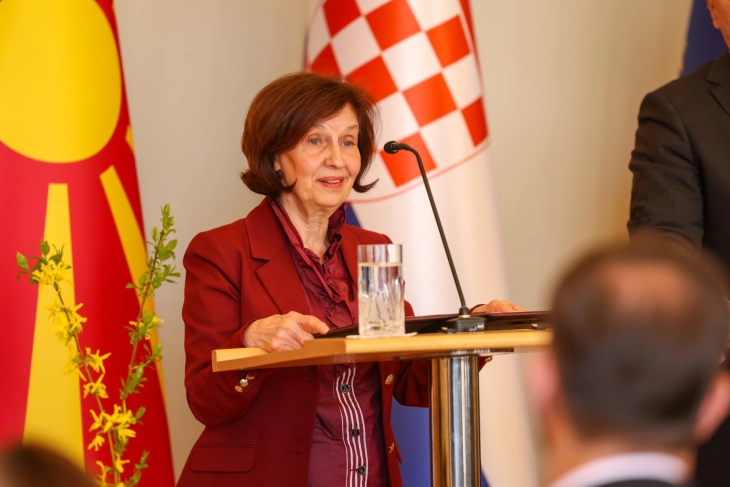
Zagreb, 25 March 2026 (MIA) – People in Macedonia have a clear position – around 80 percent don’t want the Constitution to be changed, but almost 70 percent are in favor of the country joining the European Union. This creates a difficult dilemma for the politicians on how to align the people’s will with the international obligations, President Gordana Siljanovska-Davkova said in her lecture on “The paradoxes of the Macedonian EU integration process” at the Faculty of Law in Zagreb.
History, she said, shows the country knows how to make difficult but important steps and Macedonia is the only country that had changed its name.
The president said that in diplomatic relations, it is oftentimes stressed that agreements should be honored, but it doesn’t mean, as she said, that every agreement could impose constitutional change, MIA reported from Zagreb.
According to the government, Siljanovska-Davkova said, agreements should be honored in the spirit of cooperation without national rules being broken.
In the 2017 Friendship Treaty with Bulgaria, the President said, not a single word is included suggesting constitutional change and this kind of issues cannot be introduced through protocols agreed between ministers without being ratified in Parliament.
“Two foreign ministers having assumed roles as consuls cannot amend an agreement. It is against the legal principles,” she said adding she is wondering how such provisions had become part of the negotiating framework with the EU.
According to Siljanovska-Davkova, there is a risk that protocols could open new issues that are not related to the Copenhagen criteria, which might constitute interference in the country’s internal affairs.
Thus, experts, including the Venice Commission, say the country should find the balance between respecting national institutions and international expectations, said President Siljanovska-Davkova.
Photo: President Gordana Siljanovska-Davkova's office


