New archeological findings shed light on everyday life 8,000 years ago at Tumba Madzari site
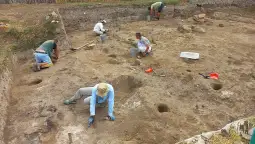
Skopje, 11 August 2025 (MIA) - Several rare finds of movable archaeological material, as well as architectural remains – a house with an interior oven and another structure that may have been used for storing grains – have been uncovered during the latest systematic archaeological excavations at the Neolithic settlement of Tumba Madzari, located in the Chento neighborhood of the Municipality of Gazi Baba. In addition to these, new fragments of the famous ceramic sculptures depicting the Great Mother, for which Tumba Madzari is known, have also been discovered at the site located nearly eight kilometers from the center of Skopje.
Skopje is one of the few cities in the world that have an archeological site from the Late Stone Age – the Neolithic period, dating back to the beginning of the 6th millennium BC, or approximately 8,000 years ago, and where optimal conditions exist for scientific and educational activities, as well as for cultural tourism.
While exploring a new area of approximately 110 square meters between June 17 and August 7, the team of archaeologists, led by Elena Stojanova-Kanzurova, uncovered new findings which she described in a conversation with MIA as exceptional. The project is part of the annual work program of the Archaeological Museum of Macedonia in Skopje and, as in previous years, is supported by the Ministry of Culture and Tourism as a project of national cultural interest.
Rare items from the everyday life of Neolithic humans
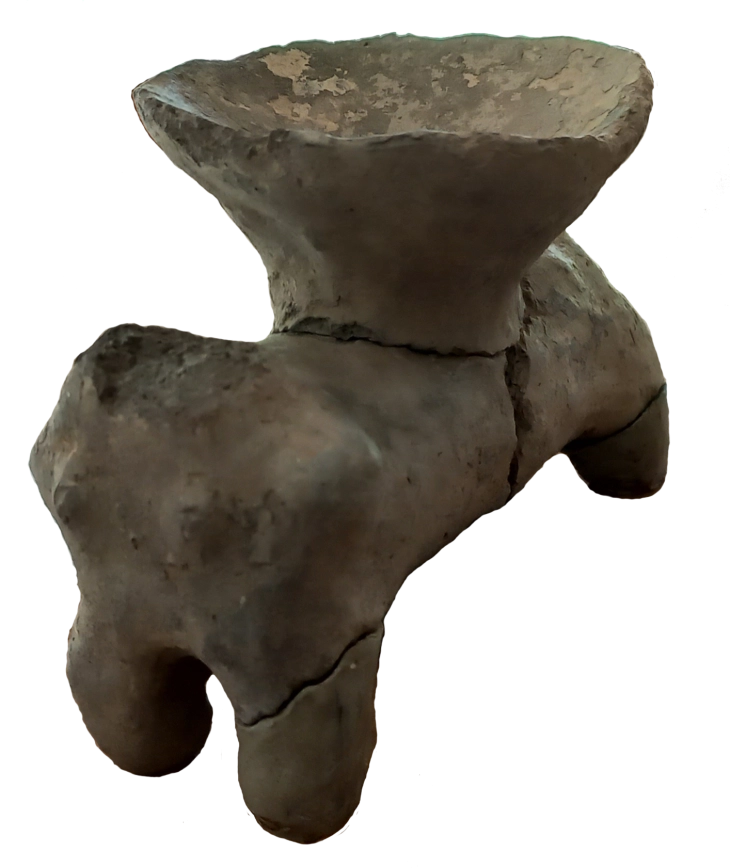
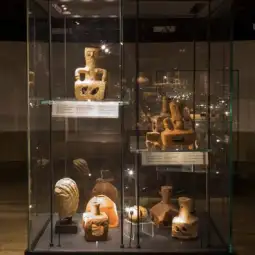
“The excavation season began with the discovery of a new archeological item, likely used for cultic purposes, which represents a symbiosis of an animal body with a human female body, featuring a conical vessel on its back (a zooanthropomorphic altar). The next find, which fascinated the archeologists even more, and currently remains a mystery, is a ceramic vessel that at first glance resembles a bird. However, in this object as well, the skilled Neolithic potter created another artistic symbiosis, this time between a bird’s body and a human face, likely female, which strongly resembles the facial design of the famous ceramic sculptures known as the Great Mothers,” says Stojanova-Kanzurova, archeologist and curator at the Archeological Museum.
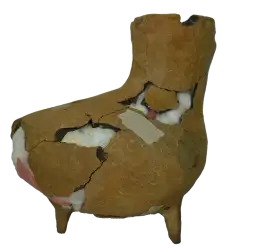
The vessel resembling a bird was discovered in a fragmented state. It stands out, according to Stojanova-Kanzurova, also due to its various painted ornaments “in the form of rhombuses, rectangular and wavy lines, feathers, hair, and on the front side of the neck faint contours can be seen that resemble a human body”.
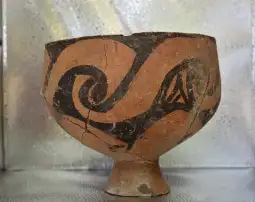
“No less valuable are the beautiful goblet with painted dark ornaments, the amphora, miniature ceramic female figurines, fragments of objects known in archeology as altar tables, fragments of vessels for various everyday uses, stone and bone tools, jewelry, and of course, new fragments of the famous ceramic sculptures depicting the Great Mother, also referred to in the field of archeology as anthropomorphic models of houses,” Stojanova-Kanzurova explains.
During every excavation season at the site, ceramic sculptures known as depictions of the Great Mother are discovered. With their unique artistic interpretation, Stojanova-Kanzurova says, they distinguish the material culture of this settlement, as well as other Neolithic settlements in the Skopje Basin within the Amzabegovo-Vrshnik group, and other Neolithic cultures in the Balkans and beyond.
The Great Mother – a symbol of Skopje
“Commercial replicas of these unique archaeological artifacts are among the most popular archaeological souvenirs among the general public. The Great Mother is a symbol of the Gazi Baba municipality, the city of Skopje, and the Skopje Summer Festival. In honor of the Great Mother, the Gazi Baba municipality organizes an annual competition to award prizes to deserving individuals and legal entities across all social sectors. These commercial replicas can be purchased at the souvenir shops of the Museum of Macedonia, the Archaeological Museum, as well as other museum stores in Skopje,” Stojanova-Kanzurova says.
She led the research team that spent nearly two months this summer searching for new discoveries at the site that has been systematically studied for almost fifty years.
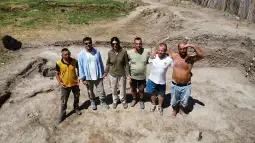
“Most of the expert team consists of archeologists from the Archological Museum: Dr. Pero Sinadinovski, M.Sc. Bunjamin Xhemaili, Blagoja Kitanovski, Jovica Ristov, Marija Videska, an architect, Pero Kovancaliev, a conservator, and Toni Mitrev. External experts include M.Sc. Sasho Vasilevski, an archeologist from Kavadarci, and Natalija Marchevska, an archeology graduate from Bitola. Unfortunately, most of these experts have been unemployed for years and are periodically employed on temporary contracts within institutions,” the head of the latest excavation explained.
The existence of a settlement from the Neolithic period within the Anzabegovo-Vrshnik cultural group was established in 1978 during the first archaeological excavation at Tumba Madzari, organised by the Museum of Macedonia. Extensive archaeological research carried out until 2013 uncovered remains of multiple houses with rich and unique archaeological materials.
Upon the Archaeological Museum of Macedonia in Skopje taking over the Archaeology Department from the Museum of Macedonia in 2014, it continued managing this site as part of its annual work programs.
Neolithic collection at Archaeological Museum dominated by discoveries from Tumba Madzari
Today, in the permanent exhibition at the Archaeological Museum in Skopje, says Stojanova-Kanzurova, the majority of the archaeological material presented from the Neolithic collection comes precisely from Tumba Madzari.
“Regrettably, much of the site was destroyed after the Skopje earthquake in 1963 due to the construction of new houses, buildings, the SOS Children’s Village, and the ESM power station. Today, only a small part of the preserved site area falls within cadastral parcels owned by the Republic of Macedonia, with the majority situated in cadastral plots that are privately owned. After several decades, the site was recently granted a new area for further archaeological research, the company 'EVN Macedonia' transferred to the Archaeological Museum its own 6,198 m² parcel for long-term research, located within the cultural heritage boundaries of Tumba Madzari. This year, a cooperation memorandum was signed between Gazi Baba municipality and the Archaeological Museum, thereby formalizing the municipality’s longstanding support for Tumba Madzari,” the lead archaeologist tells MIA.
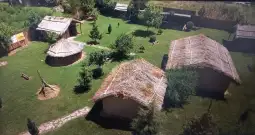
Stojanova-Kanzurova stressed that despite challenges in organisation and staffing, the Neolithic Village at Tumba Madzari has hosted many educational and cultural events, and she says has become a favored place for visits by both domestic and foreign guests since its establishment as an open-air museum in 2008. This has additionally aided in promoting the cultural values of the Neolithic period.
"It also aims to develop a sense of valorization of our oldest cultural heritage in Macedonia among the broader public. Over the past years, several houses inspired by Neolithic architecture have been constructed in the Neolithic Village at Tumba Madzari. Their interiors feature replicas of diverse movable and immovable household items, along with scenes from daily life, in an effort to reconstruct part of the life of the Neolithic people who inhabited this region 8,000 years ago. The Neolithic Village has received multiple awards recognizing its significant cultural contributions," Stojanova-Kanzurova tells MIA.
Hatka SMAILOVIKJ
Photo: Archeological Museum of Macedonia - Skopje


