Päivi Räsänen for MIA: How could online post of Bible verse trigger over six years of criminal prosecution?
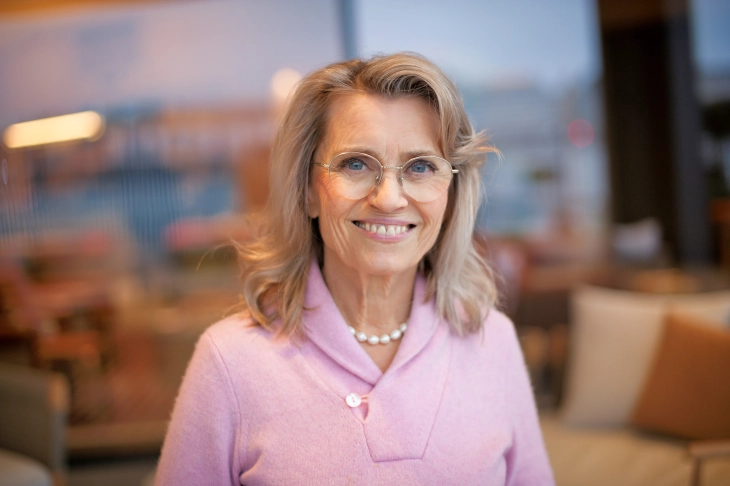
Skopje, 15 February 2026 (MIA) — Finnish politician, medical doctor, Christian Democrat, member of the Finnish Parliament and former interior minister Päivi Räsänen has been involved in a high-profile legal battle regarding freedom of speech and religious expression since 2019, when she was investigated and subsequently charged with "hate speech" (specifically "agitation against a minority group") for expressing her Christian views on marriage and sexuality.
The charges stemmed from a 2019 tweet in which she questioned her church's sponsorship of the Helsinki Pride event by posting a picture of Romans 1:24–27 from the Bible. The passage, written by St. Paul, speaks about same-sex relations. She was also prosecuted for a 2004 pamphlet titled "Male & Female He Created Them." Räsänen has maintained that her comments are not hate speech but rather "love speech" and a reflection of biblical teaching, arguing that her case is a crucial test for freedom of speech in Finland.
In this exclusive interview with MIA, Räsänen speaks about the European threat to free speech, posing the question: “How could a single online post of a Bible verse trigger a 13-hour police investigation and over six years of criminal prosecution?”
Your case has become a symbol of the struggle for free speech in Europe. How would you explain your situation to the citizens of North Macedonia – how is it possible for a former Minister and Member of Parliament to face criminal prosecution for posting a Biblical verse and expressing her religious beliefs?
I am often told that my story sounds implausible to those who assume such things cannot happen in a free society. I understand their reaction. I too asked myself often: “How could a single online post of a Bible verse trigger a 13-hour police investigation and over six years of criminal prosecution?”
I never incited violence or targeted any individuals with my post. I simply shared my deeply held Christian beliefs on Twitter in a question directed at my church leadership, the Evangelical Lutheran Church of Finland, when they decided to participate in a Helsinki Pride event. I was criminally charged under Finland’s law for War Crimes and Crimes Against Humanity. Now, after two previous acquittals, I await a decision from the Supreme Court of Finland on these charges.
You recently testified before the U.S. House Judiciary Committee about the "European threat to free speech." What was the most important message you wanted to convey to the American public and the world?
This is what I told Congress: My case “is about whether citizens, including clergy and elected representatives, may speak openly on matters of faith and conscience without fear of prosecution. It is about whether it is illegal to say what you believe.”
I added: “You do not need to agree with my beliefs to see the danger of criminalizing peaceful speech. When the state controls which ideas and beliefs may be expressed, democracy becomes fragile.”
Your case is now before the Supreme Court of Finland. If the court rules against you, what kind of precedent does this set for religious freedom and free expression across Europe?
My case raises important questions regarding how freedom of expression and freedom of religion are understood and protected in Finland and across Europe.
If the Supreme Court were to pass a judgment on my writings, the consequences would be very dangerous. It would constitute a negative precedent, as a result of which thousands of similar writings would be at risk.
The mere fact that peaceful expressions of Christian convictions can lead to a lengthy criminal prosecution is cause for concern and should prompt reflection on how these fundamental rights are understood and protected in our societies. At the same time, it is important to emphasize that the lower courts have functioned as they should. Both the district court and the court of appeal carefully examined the case and acquitted me, affirming that expressing traditional Christian beliefs is not a crime. This demonstrates the vital role of independent courts in upholding fundamental rights and safeguarding democratic values.
A truly tolerant European society is one where people can hold and express different convictions without fear of prosecution, while trusting that the rule of law will protect open debate. I hope my case serves as a reminder of how essential it is to remain vigilant in defending freedom of expression for everyone.
The prosecution argues that citing certain Biblical verses in public can be "insulting" and thus criminal. Where, in your opinion, should the line be drawn between protecting minorities and the right to express one´s deeply held religious beliefs?
In a democratic society, freedom of religion and freedom of expression must remain non‑negotiable. These freedoms include the right to publicly cite and interpret the Bible, even when those passages challenge cultural trends or express views that some may find uncomfortable or disagreeable. What is important now is recognizing the threat before us and continuing to stand together for free expression and freedom of religion.
Do you believe that legal cases like yours are leading to a "chilling effect" where citizens and clergy are becoming afraid to speak their minds on moral and social issues?
When people do not know the loving and merciful God, what is left is a very limited picture of the Christian faith. The core doctrines and beliefs essential to the Christian faith are no longer embraced or even understood by the majority. I am concerned that in the future Christians will have a higher threshold presenting teachings based on the Bible. The mere fact that there is still an ongoing trial, even without a conviction, has a restrictive effect on freedom of religion. Accusations, interrogations, and trials cause the public to fear expressing their convictions.
Our country is undergoing various legal and social reforms on its path to the EU, what would be your message to our public regarding the balance between EU regulations and national/religious freedoms?
EU membership does not require abandoning Christian heritage. At the same time, it’s natural for citizens to be concerned that EU regulations might influence local traditions, faith‑based values, or established legal norms. I wish that European treaties will protect freedom of religion and recognize that faith has an important role in many member states’ cultures.
After many years of legal battles, what keeps you motivated to continue this fight, and would you change anything about your 2019 tweet if you could go back in time?
I still stand strongly behind these statements. From the beginning, I deeply felt that the entire process was in God’s hands and had a purpose. I have considered this fight as my calling.
I am blessed by the steadfast support of my loved ones. My dear husband Niilo is a pastor and a Doctor of Theology; we have five children with their families and 12 lovely grandchildren. They have all stood by me, encouraging me to stay strong and pray for me.
Freedom of faith and free speech are essential for the mission to “make disciples of all nations”, as the Bible advise us to do. God’s word is not chained by any man‑made obstacles. Often persecutions and limitations may give an unusual chance to take the Gospel to places where it otherwise might not ever be heard. Without the criminal charges, I would not have had the exceptional chance to testify about Jesus at the police station, courtrooms and through live broadcasts and press conferences straight to Finnish homes. I would not change anything.
Jasmina Tasevska


