Bozhinovska at Astana Forum: Critical minerals are new geopolitical axis of energy transition

Skopje, 30 May 2025 (MIA) – Minister of Energy, Mining and Mineral Resources, Sanja Bozhinovska, participated Friday in a plenary session "The Resource Race: Who Controls the Green Future" as part of the Astana International Forum 2025, pointing out that critical minerals are becoming a key factor in global energy and security policy, the Ministry said in a press release.
Bozhinovska noted that transition to renewables and green technologies is driving demand for critical minerals including lithium, cobalt, copper, and graphite, because, according to her, in addition to being important industrial raw materials, these resources are also strategic tools shaping the new world order.
The Minister mentioned the role of smaller countries in the new map of global energy interests, as well as Macedonia's prospects, with an emphasis on sustainable resource use, regional cooperation and commitment to environmental standards and good governance.
"The transition to renewable energy sources and green technologies is driving unprecedented demand for critical minerals such as lithium, cobalt, copper, and graphite. These resources are not only important industrial raw materials – they are strategic tools shaping the new world order… At a time when the world is striving for decarbonization, we must not allow a new form of dependence – this time not on fossil fuels, but on minerals under geopolitical control," Bozhinovska pointed out.
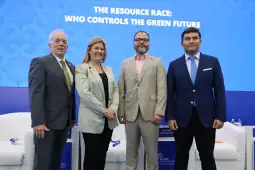
According to her, the country has the potential to become part of the solution through sustainable use of its own mineral resources and development of processing and storage capacities. As a step towards increasing grid flexibility and better integration of variable energy sources, Bozhinovska pointed to the new Law on Energy, under which all new energy capacities must include battery storage systems of at least 20 percent of the installed capacity, as a step towards increasing grid flexibility and better integration of variable energy sources.
"Our goal is to build a resilient, sustainable and independent energy system. This means investing not only in renewables, but also in storage technologies, recycling and responsible management of mineral resources," said Bozhinovska.
She noted that the key to a successful energy transition is in balancing economic interests, environmental protection and social justice. Bozhinovska called for international cooperation and diversification of supply chains for critical minerals, in order to ensure a stable and just green future for all.
Photo: Ministry of Energy, Mining and Mineral Resources


