U.S. Department of State: Doing business in North Macedonia generally easy, corruption remains a challenge
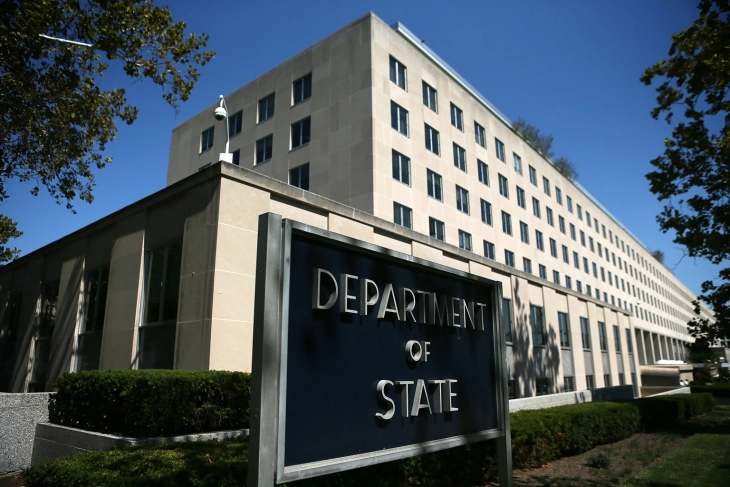
Washington, 30 September 2025 (MIA) - While doing business is generally easy in North Macedonia and the legal framework is largely in line with international standards, corruption is a constant challenge. Large foreign companies operating in the Technological Industrial Development Zones (TIDZ) generally report positive investment experiences and maintain good relations with government officials, reads the 2025 North Macedonia Investment Climate Statement of the United States Department of State.
The Republic of North Macedonia, an EU candidate country since 2005 and a NATO member since March 2020, notes the report, continues to be receptive to U.S. commercial investments.
“However, the country’s overall regulatory environment remains complex, and frequent regulatory and legislative changes, coupled with inconsistent interpretation of the rules, create an unpredictable business environment conducive to corruption. The government generally enforces laws, but there are numerous reports that some officials remain engaged in corrupt activities. Transparency International ranked North Macedonia 88th out of 180 countries in its Corruption Perceptions Index in 2024, with a score of 40 out of 100. Apart from several announcements that the government is working to promote new investment, limited efforts were seen in 2024 to attract new investment, focusing instead on energy efficiency improvements, financial assistance for vulnerable households, and softening inflationary pressures. However, the government did court foreign companies and investors for public projects in transportation and energy infrastructure,” says the document.
The State Commission for the Prevention of Corruption, adds the 2025 North Macedonia Investment Climate Statement, has opened several corruption-related inquiries, including several involving high-level officials, although only a handful have resulted in criminal prosecution to date.
“Since 2021, Embassy Skopje has identified digitalization and green energy as areas ripe for U.S. investment due to the Government of North Macedonia’s commitment to attract and support investments in these strategic sectors. North Macedonia’s location, at the crossroads of pan-European transport corridors VIII and X, is an advantage as companies consider “near-shoring” their production to be closer to consumption centers in Europe,” says the report.
In 2023, it adds, GDP growth was hampered by higher energy prices, inflation, disrupted supply chains due to uncertainty created by the Russia-Ukraine war, and a slowdown in investments.
Despite government stimulus measures to assist recovery, GDP in 2024 only grew by 2.2 percent, with real GDP estimated at $12 billion. Government support also cushioned the impact of the crisis on the labor market, with the unemployment rate in the second quarter of 2024 at 12.5 percent. In its Growth Acceleration Plan, the government set targets to double the average annual GDP growth rate from 2.5 percent to 5 percent in the period 2022-2026, create 156,000 new jobs, and reduce unemployment to 8.6 percent, concludes the 2025 North Macedonia Investment Climate Statement.
MIA file photo and screenshot


