Trump further extends deadline for strikes on Iranian power plants
Washington/Tehran, 27 March 2026 (dpa/MIA) – US President Donald Trump said on Thursday that he is extending the deadline for attacking Iranian power stations to the evening of April 6, while also issuing fresh threats if Iran doesn't agree to a peace plan.
In a post to his Truth Social platform, Trump wrote "talks are ongoing" and "going very well," pushing back against what he called erroneous media reports.
Trump had issued a threat to strike Iran's power plants if Tehran failed to reopen the Strait of Hormuz, a strategically vital waterway for international energy trade.
He then extended the deadline by five days, citing productive talks as the reason, which Iran denied publicly. That deadline has now moved from Friday to April 6, Trump said.
Witkoff cautiously optimistic as Trump ups pressure on Tehran
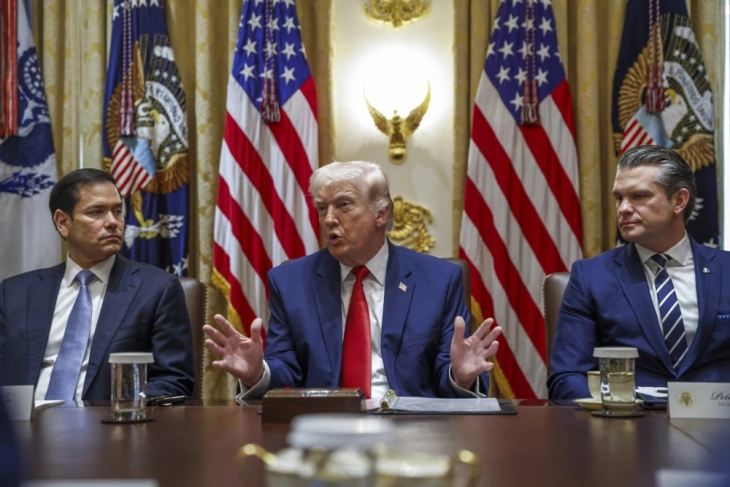
US Special Envoy Steve Witkoff said on Thursday that there are "strong signs" for talks between Washington and Tehran, while the president issued fresh threats during a Cabinet meeting at the White House.
"We have strong signs that this is a possibility and if a deal happens, it will be great for the country of Iran, for the entire region, and the world at large," Witkoff told reporters in Washington.
He confirmed a 15-point peace plan had been sent to Tehran, with media reports saying Iran has already submitted counter-demands.
Meanwhile, Trump renewed threats against Iran and did not rule out seizing Iranian oil. "It is an option," he said.
The US recently attacked military sites on Kharg Island, Iran's key oil export hub.
The course of the war remains highly uncertain as the deadline of Trump's Hormuz ultimatum looms, with scenarios ranging from a swift ceasefire to the deployment of ground troops.
Pakistan confirms it is mediating between US and Iran
Pakistan's foreign minister confirmed on Thursday that his country is relaying messages between the US and Iran as part of mediation efforts also involving Turkey and Egypt.
Iran has officially denied direct negotiations. Iranian Foreign Minister Abbas Araghchi said in an interview on state television Wednesday that there "have been no negotiations or talks with the American side."
He confirmed that the US had conveyed messages to Tehran via intermediaries, to which Iran had responded by relaying its own position or issuing warnings. "This is neither negotiation nor dialogue. It is merely an exchange of messages."
Meanwhile, Trump on Thursday continued to insist that Iran was "begging ... to a make a deal." He escalated the pressure on Iranian officials, warning them to consider the peace proposal "before it's too late."
Trump also said that Iran had allowed 10 oil tankers to pass through the Strait of Hormuz as a "good faith" gesture.
Report: Iran relays response to US peace proposal
It remains unclear who speaks for which parties in the conflict. Iranian news agency Tasnim reported on Thursday that Tehran submitted a response to the US plan overnight, calling for an end to hostilities on all fronts.
But Iran's presidential office and the Islamic Revolutionary Guards Corps have said that Tehran rejects the US proposal.
According to the report, which cites an unnamed source familiar with the matter, Tehran is now awaiting Washington's response.
It is considered unlikely that the US would accept the demands, which also include war reparations and the recognition of Iranian sovereignty over the Strait of Hormuz.
Israel claims Iranian naval commander killed
As the US administration struggles to force Iran to fully open the Strait of Hormuz to oil shipments, Israel reported that is killed a key naval commander behind the blockade.
His killing was a clear message to all leading members of the Revolutionary Guards who currently controlled Iran, Israeli Defence Minister Israel Katz said on Thursday.
Scepticism in Tehran amid US negotiations
In Tehran, there is widespread scepticism over US intentions. Many in the leadership fear that Washington may be planning military operations on Kharg Island or in the Strait of Hormuz.
Parliament Speaker Mohammed Bagher Ghalibaf warned on X of a possible "occupation of an Iranian island" by "enemies" with the support of a state in the region.
If that happened, he said, that country would have to expect attacks on all its critical infrastructure.
In another post, Ghalibaf asserted: "No one can issue an ultimatum to Iran and the Iranian people."
The United States and Israel launched a large-scale offensive against Iran in late February and the conflict has spread to the wider Middle East region.
Tehran has retaliated with strikes against Israel and Gulf countries allied with Washington.
More than 1,900 people have been killed in Iran since Israel and the United States began their attacks, Iranian Deputy Health Minister Ali Jafarian said on Thursday.
Among the dead are 240 women and more than 200 children, Jafarian told broadcaster Al Jazeera, adding that over 24,800 people have been injured.
Photo: EPA


