The perception that Parliament is a voting machinery for laws should end, Gashi tells MIA
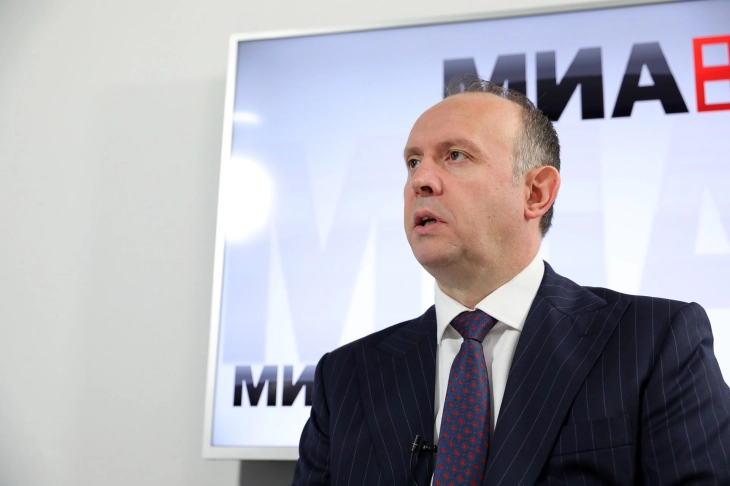
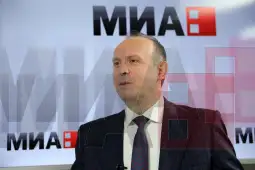
Skopje, 27 December 2025 (MIA) – Mutual respect between the MPs and even between different political parties should prevail in Parliament. If we don’t respect each other, we cannot expect the citizens to respect us, too. This is where it all starts, Parliament Speaker Afrim Gashi says in an interview with MIA.
Differences exist and they should exist, he says, but we should be barricaded by them we should find common solutions to the benefit of the citizens through dialogue.
In a message conveyed to the MPs and to the citizens at the start of the new year, Gashi calls for more political culture and mutual respect.
“We are creating a contaminated society, there’s a lot of negative energy. Parliament should be in a way a leader in bridging the value system. We should start talking about nice things, about respect, love, solidarity, empathy, ethics, family values, etc,” he says.
Read Speaker Afrim Gashi’s interview in full below:
Being the Speaker of the Assembly, how would your rate the activities of members of Parliament in 2025?
I’d like to refrain from rating because it wouldn’t be appropriate toward my colleagues because I’m also a member of Parliament, the first among equals. I also think it would be best for the citizens to rate our work. Unfortunately, the best things, institutional, service development, trainings and improvements are not seen, they remain “under water, and the citizens cannot see the things we do every day. I consider myself as someone who is committed to the development of the assembly service. I’m very happy for having such an institution. I try to do everything for them, to become better, to be in service of the members of Parliament, which is ultimately to the benefit of the citizens.
I believe that in terms of transparency, digitization, parliamentary diplomacy, implementation of strategic goals, we have worked hard.
A public opinion poll, conducted by the Institute for Democracy and NDI, which wasn’t released, showed for the first time in ten years, the public’s perception of Parliament has improved. I’m especially proud of this result, which is why we have to work in order the citizens, those who pay us and elect us, to be satisfied with what we do.
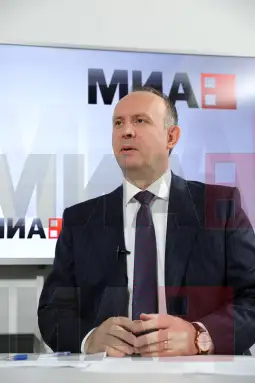
How would you summarize the year in terms of adopted laws, the number of sessions held, how many laws were adopted in regular procedure and how many were fast-tracked, decisions, resolutions, etc.
Ultimately, it comes down to numbers of organized plenary session, law adopted, according to which the Parliament’s work should be assessed. In total, this year we have held 52 sessions, and in 18 months, 78 sessions in total. A total of 403 laws were adopted in 18 months, while in 2025, 219, of which 108 were passed in a fast-tracked procedure, and about 89, 90 in a regular procedure. Unfortunately, fast-tracked procedures weren’t an exception. It is in the spirit of the new rules of procedures, it is what international institutions are requiring. We are constantly urging the Government, the MPs over this. Although we have improved since last year in terms of laws adopted in regular procedure, we’ll insist the number to grow in 2026 and to bring the number of fast-tracked procedures to a minimum. In comparison, a total of 506 laws were adopted between 2020 and 2024. The current assembly, in 18 months, had adopted 403 laws. This year we adopted more laws than last year. The Parliament has increased its activities and capacity to adopt more laws.
In terms of laws passed in fast-tracked procedure, you said you’ll speak with the prime minister and the MPs. But do you have a proposal on how to reduce the number of laws in fast-tracked procedure.
We plan as soon as January to adopt a calendar of activities and plenary sessions, that will be also sent to the government in order to know exactly when, which months, on which days we will hold plenary sessions. And if they want a law to be passed, they will know when to send it. However, we lack culture involving cooperation between sectors and services working within the ministries and in Parliament. In 34, 35 years they only know how to get things completed fast. They believe Parliament should be a voting machinery to pass laws. This approach has to change. We have to improve the importance and dignity of Parliament. Everyone who proposes legislation, the ministers and the administration, should know that, after all, it is the highest body and the most crucial institution in the country according to the Constitution. All of our political system is based on parliamentary democracy. Laws have to be adopted in regular procedure.
And the citizens will be better informed about the novelties included in these laws.
That’s my point. Not only to say we increased the number of laws in regular procedure, but also to improve the quality of laws. As part of regular procedure, we can have public debates, discussions with experts involved. We should do everything in our power to make Parliament again the most important institution in the country.
The ruling majority is in a comfortable position compared to the former parliamentary composition. Also, the opposition is very active. Being the head of the legislative house sometimes you face criticisms. What the political dialogue is like “behind the scenes” of the representatives of the parliamentary parties?
You were mild by saying sometimes. Almost always the speaker is under fire. I’m aware of the position I’m in. I’m trying to have open communication with all parliamentary groups and coordinators. It is one of the basic principles of my work as speaker. I try to treat everyone equally.
During a break of the Q&A session, you met and the coordinators of parliamentary groups met with Justice Minister Igor Filkov over the Electoral Code. What did you agree at the meeting?
We had a very important coordination meeting over the Electoral Code. You know that right after the local elections, we discussed the need of adopting a new Electoral Code. We initiated it at the working group. It’s quite normal for the government to react. At the request of the justice minister, we called a meeting in which we were told that the text of the Electoral Code is in its final stages.
Is it a new Electoral Code?
We don’t know it yet. We agreed that in January the working group will hold its first session. We discussed who will be in the group, where talks will take place, etc. The Ministry of Justice is heading this process and they will call on all political parties to nominate two representatives each. We agreed on the need for full consensus for the Electoral Code. Once we have the text, we'll see if it is an entirely new Electoral Code or if it's amended, followed by remarks from political parties and their alignment, so that we come to the final solution.
The last Parliament plenary session is scheduled on Tuesday. The new Law on the Judicial Council is on the agenda. What else could be included?
The Law on the Judicial Council is truly one of the most important laws that are not only part of the reform agenda, but also are important for our judicial system. You know that this is an institution that is one of the key ones in the judicial system and that is why it has been worked on for a long time. It’s a good thing that it has been proposed in a regular procedure. We had almost a whole month to discuss it. The first reading has passed, etc. Now we expect to adopt the law on Tuesday. The second legislation also involves about traffic. I do not know exactly what the name of the law was, it will be adopted at the same session. We do not know whether there will be other laws.
What about the election of an ombudsman? You called on the political parties to find a political will to solve the issue, which involved the Badinter principle. In fact, it lacks a few votes from the non-majority communities. Has there been a new development?
Ombudsman is a key institution in the country. We started that procedure, it reached the plenary session before being passed by the Commission on Election and Appointment Issues. We did not want to put the item to a vote before we were sure, approximately knowing that it would pass for sure, because then the repeated procedure would mean a waste of time. We are doing this in order to resolve that situation as quickly as possible. So, the country should have an Ombudsman, which is very important for the realization of the fundamental rights of citizens, as well as especially during the elections of the opposition parties, etc. In any case, we know the importance of that institution, and it is very important to have a solution as soon as possible because the deputy ombudsman has the right to sign until the end of December. After the New Year, we will be faced with a very difficult situation. Therefore, I appeal to all political parties, I call on all MPs through you and through your broadcast to find the strength to meet. Let's think about it these days, Monday, Tuesday, we can put it [the item] in a session, call a session, and vote on it immediately.
Can a new ombudsman be nominated?
It is part of the political compromise of the parties. No one is insisting on a name. I think the problem is the procedure. I don’t know if the opposition wants to make a point that it can block things. But I believe the ombudsman is not the tool over which we should be making a point. We should be bridging differences when it comes to normal functioning of key institutions in the country.
In terms of political culture, which I champion – we are all different political parties and we have different views. But we have to have a joint approach and open dialogue to solve important issues of the country.
Most probably, activities in January will focus on the inquiry committee on the incidents in Kochani, Laskarci, the Modular Hospital and Besa Trans and the changes to the Criminal Code. What’s the plan?
We passed a decision at a plenary session on setting up the committee. The political parties at coordination meeting should put forward names to the Commission on Appointment and Election Issues before a chair is elected and the body to start working right after. I hope the committee starts working very soon.
Regarding the changes to the Criminal Code?
I think the Criminal Code will be part of the agenda of one of the coming sessions in January. This legislation was adopted in regular procedure. There will be time for public debates, for expert debates.
Regular procedure is the best way to make a quality law. I’m confident we will past the legislation getting back to what it was. I hope we will commit seriously to reforms in the judiciary because the public perception is that 2026 should focus on that. After the resignation of the chief public prosecutor, we will have chance to reform. We have a new Law on the Judicial Council. The initial key changes allowing crucial reform in the judicial system are evident.
After the local elections, there were changes in the political camps with more under way until spring. Will you remain speaker of Parliament?
It doesn’t matter to me. I work every day as if it is my last as speaker. What matters to me is to do my best and to have a peaceful and clear conscience when I go to bed to sleep. Whatever happens tomorrow happens. You know, things don’t depend on me, politics is based on compromises. Anything can happen. I don’t preoccupy myself with it. I doesn’t matter what I do. What matters to me its to improve further the post and the institution.
Let me reframe. Do you expect to complete your term as Parliament speaker?
The answer is the same. It really doesn’t matter. I work every day as if it is my last.
I do this with love. I truly want to leave positive marks in the institutional work of the Parliament. What we will achieve, we’ll see and the citizens will have the final say. Nevertheless, I’m doing this with huge commitment and love.
Since you’re a member of Alternativa, which is part of Vlen, are changes expected within the coalition? The coalition was expected to become a political party.
As I said before, when you are dedicated to one thing, you cannot be dedicated to something else. My friends entrusted me with speaking in Parliament and I’m fully committed to that. When I was the leader of Alternativa, I was fully committed to being the leader of the party.
I’m glad that the Vlen coalition functions. The idea of becoming a political party is very active and alive and it can happen soon. And I believe it’s the best way. The citizens are tired of division, of political parties. They want certainty. They want to see that the battle is not on who will be the leader, but on the values we share.
In two years, this political composition proved it’s homogenized, it can run in parliamentary and local elections after organizing campaigns together. It proved it can be part of a government coalition. No one know who comes from which party. A lot of unity has been achieved in the past two years.
What’s your comment on the opposition in the Albanian bloc?
In life and in politics, people should focus on themselves. They should care for what they are doing, not for what others are doing.
You are oftentimes criticized by your rivals in Parliament.
Some people want to fight, I want to work. I focus on the Parliament, the MPs, on the institution, on dignity, political culture and the code of ethics. I think it is beneficial for the citizens.
I think if we want to progress as a country, it would be smart people to clean up their yard first. To see what we can do personally first, then what we can do in the political parties, then in the institutions before preoccupying with others.
Is it possible DUI leader Ali Ahmeti to step down?
It really is their business. The members of this party have the right to decide who should represent them. If they think the same person should continue representing them after 22 years in power, it’s their business. I respect it.
It’s important to know to respect the decisions of one group of citizens. In Parliament, we cannot agree with every single MP. But every MP represents 10,000 voters. Which is why we should respect them because of the people they represent. The same applies for party leaders. When a group of people is entrusted with a task, a public one, we, the other should respect it as being the will of a certain group of citizens.
What’s your message for the MPs and the citizens for the New Year?
First of all, I’ll repeat what I said a moment ago. Respect must prevail in the Parliament, mutual respect between MPs, and also between different political parties. If we do not respect ourselves, we have no respect, we cannot expect that citizens will respect us. This is where it all starts.
Differences exist and should exist. But we should not be barricaded in differences. We should, through dialogue and based on argumentation, come to common solutions that are in function and for the benefit of all citizens. I expect political culture, mutual respect to increase, and it is time to start thinking that those most important human qualities that we have from our childhood, how we were brought up to respect, for tolerance, the love that we should show towards our colleagues and other people with whom we work together, should begin to prevail. We have too much negative energy, we are too contaminated, we are creating a contaminated society. And the Parliament should in some way be the leader of the efforts to bridge the value system. We should also make a value transition in society. Let's start talking about good things, about honor, about love, about positive things in the country, about help, solidarity, about empathy, about ethics, about morality, our family values, etc.
And while we are on the subject of family and the public, I take this opportunity to wish you and all citizens happy holidays, a happy New Year, much success, health and above all, love in your families and among all citizens.
Photo and video: MIA


