Study: 31.2% of children in North Macedonia overweight, 13.7 percent obese
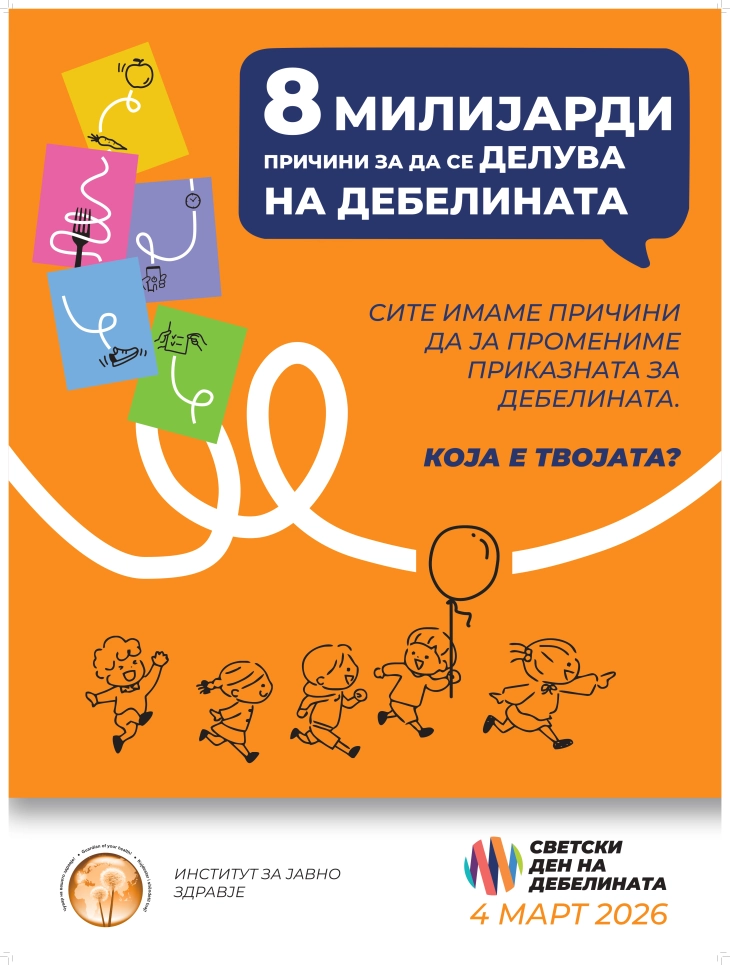
Skopje, 4 March 2026 (MIA) - Findings from the WHO European Childhood Obesity Surveillance Initiative (COSI) point to serious challenges related to nutrition and body weight among children aged 6-9 in North Macedonia, the Public Health Institute said Wednesday on occasion of World Obesity Day.
The Institute said 31.2 percent of children in the country are overweight, with 13.7 percent of them living with obesity – which is over the European average of 25 and 11 percent respectively.
"Excess weight and obesity are more common among boys than girls. Only 25 percent of children in the country eat fresh fruit daily, this is the lowest level of fruit consumption across the entire European region. Just 20 percent consume fresh vegetables every day, which is also among the lowest rates in Europe. Savory snacks are eaten by 40 percent of children – the highest proportion compared to other countries included in the COSI. More than half, or 51 percent, consume sweets more than three days per week,” the Institute said.
Regarding physical activity, 40 percent of children spend more than two hours a day in front of screens – whether television or electronic devices. About 63.3 percent walk or cycle to school, and among those living within two kilometers, this habit is practiced by as many as 89 percent. A large majority, 94 percent, engage in at least one hour of active play daily at a moderate to vigorous intensity, and 48.2 percent regularly participate in sports or dance for more than two hours per week. Most children, 88.6 percent, get at least nine hours of sleep each night.
The Institute noted that overweight and obese children are more common in families with parents with a low to medium level of education. It also said healthy habits were more common among children of parents with a higher level of education.
“There is low awareness among parents when it comes to recognizing overweight and obesity in their children. More than half of children living with overweight and/or obesity, are perceived by their parents to be normal weight,” the Institute said.
The PHI stressed the results of the study stress the urgent need for systemic interventions in children’s school and family environment to promote healthy growth and development.
“Interventions are needed in other areas as well. Reformulation of food, information related to food, advertising, the urban environment, and the ability to practice walking and physical activity safely are just some of them,” the Institute said.
Photo: PHI


