MFAFT: We expect European behavior from Bulgaria, respect and recognition of Macedonian language
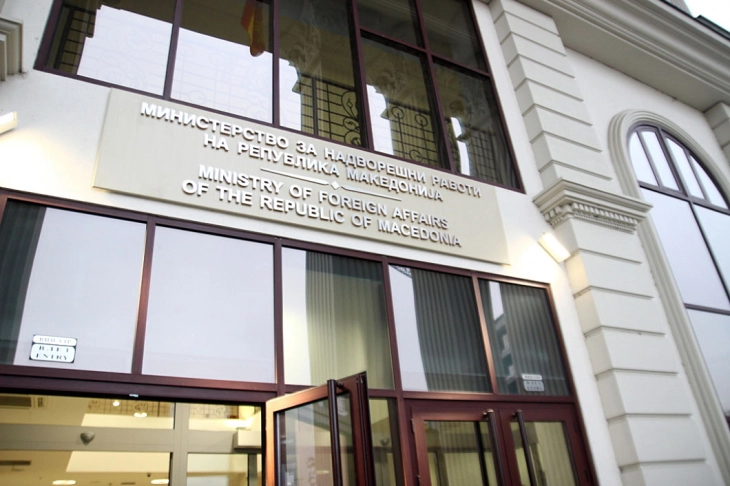
Skopje, 5 January 2026 (MIA) – It is concerning that instead of being welcomed as a constructive step forward, the draft action plan for the protection and promotion of the rights of communities is subject to abstract and unfounded comments by Bulgaria, which do not contribute to building trust and good faith between the two countries, the Ministry of Foreign Affairs and Foreign Trade of the Republic of North Macedonia said in a press release Monday, stressing that “instead of unsubstantiated comments, from our neighbor we expect European behavior, including full respect and recognition of the Macedonian language”.
“The Republic of North Macedonia remains consistent with European rules and the merit-based approach to enlargement. The draft action plan for the protection and promotion of the rights of communities has been drafted in Macedonian and English by domestic and foreign experts, in close consultation with the Council of Europe and the European Commission. The document contains clearly defined measures, deadlines, and relevant institutions, and it is fully aligned with the highest European standards,” the Foreign Ministry said following the Bulgarian Foreign Ministry’s reaction to Prime Minister Hristijan Mickoski remark that “Bulgaria takes issue with the use of the Macedonian language in the action plan on minorities”.
The Ministry of Foreign Affairs and Foreign Trade clarified that the drafting of the action plan unfolded in several phases beginning in 2023, with intensified final drafting during the last six months of 2025. According to the Ministry, throughout the entire process, domestic and international experts in international law, human rights, and minority rights were actively involved and regularly consulted, while the Council of Europe and the European Commission stressed that the document encompasses all relevant European and international standards.
“We stress that the Republic of North Macedonia has been recognized as a positive example in Europe when it comes to the implementation of the rights of communities and this will continue to be the case in the future. We remain firmly committed to equality, inclusion, and efficient implementation of policies in the interest of all our citizens,” the Ministry said.
In its reaction to the Prime Minister’s statement, the Bulgarian Ministry voiced concern over “the latest fabricated theses by the authorities in Skopje, which sharply diverge from the essence of the 2022 European consensus”.
“The question of the language in which the expected action plan on the rights of communities of North Macedonia should be drafted is an internal matter for the neighboring country and is not an issue of bilateral relations. The document will be implemented by North Macedonia’s institutions with regard to its own citizens, and therefore it is logical for it to be written in a language accessible to them. Skopje’s decision to present the draft plan to its citizens in English is difficult to explain, particularly if the plan is intended to be effectively implemented,” the Bulgarian Foreign Ministry said.
Bulgaria’s MFA recalled that the action plan is a step envisaged to follow the inclusion of Bulgarians in the country’s Constitution, which, they stressed, would allow the country to open EU accession negotiations.

Prime Minister Hristijan Mickoski told journalists on Sunday that Bulgaria takes issue with the action plan because it is in Macedonian.
“I regret that they once again missed the chance to be good neighbors. Not a single member state opposes this, not a single minority in Macedonia opposes it, because there was a public debate. Now, the issue is the fact that it was in Macedonian. Forgive me, but my mother tongue is Macedonian, the official language for international use is Macedonian, there is no other language. If someone takes issue with this, then I cannot help with that and I regret that this is the case,” Mickoski said.
The Prime Minister said everything had been done as requested – the suggestions of an expert from Italy were accepted in drafting the plan, and the request from Brussels was fulfilled “to send it to Bulgaria a day in advance to show good will.”
“And that’s what we did, we sent it a day earlier. Now, they object because it is in Macedonian. But that is the official language under the Constitution, and neither I nor the minister can violate the Constitution. If they think we will send it in another language, we have no other language under the Constitution. It is the Macedonian language. Once again, they show that it is not about the minority or Bulgarians in the Constitution. Their demands have much deeper roots, the problems are deeper, and once again they show that their intent is entirely different,” Mickoski said.
Mickoski said the government currently has no contacts with Bulgaria, but added that it remains available “at any time and in any place, in any organization, to go, to talk, and to present our arguments.”
“We will accept everything, of course not the inclusion into the Constitution, we will accept all remarks, but I cannot renounce my native Macedonian language,” Mickoski stressed.
Photo: MIA


