Iran reimposes control over Strait of Hormuz, citing US blockade
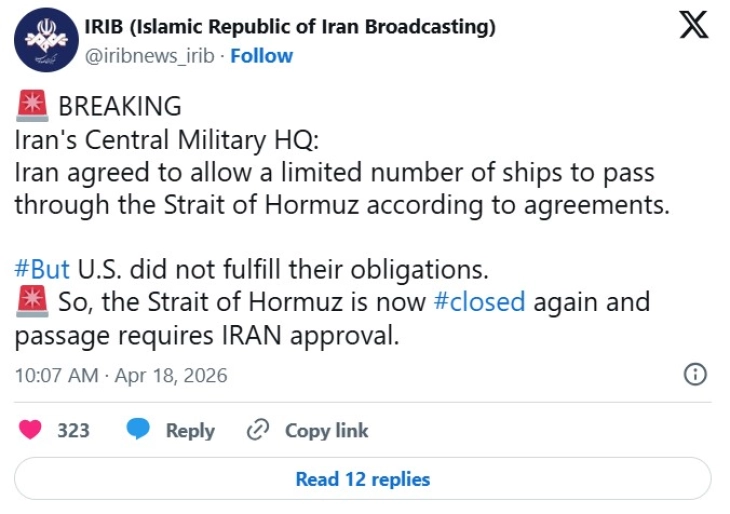
Tehran, 18 April 2026 (dpa/MIA) - Iran has reversed its decision to reopen the Strait of Hormuz due to the continued US blockade of its ports, the armed forces headquarters said on Saturday, as reported by the Fars news agency.
"Control of the Strait of Hormuz has returned to its previous state, and this strategic strait is under the strict management and control of the armed forces," said a spokesman for Khatam-al Anbiya Central Headquarters, the unified command structure of Iran's military.
The spokesman said Iran had previously agreed "with good intentions" to allow a limited number of oil tankers and commercial ships to pass through the strait.
"But unfortunately, the Americans, with their repeated breaches of trust that are part of their track record, continue to engage in piracy and maritime theft under the so-called title of blockade," he said, according to Fars.
The situation will not change until the United States restores unrestricted freedom of movement for ships travelling to and from Iran, he added.
After weeks of a near-complete blockade of the key shipping route, the leadership in Tehran said on Friday that oil tankers and commercial vessels could again pass through the Strait of Hormuz during the ceasefire.
US President Donald Trump welcomed the move, but said the US would maintain its own naval blockade, which applies only to ships coming to and from Iran, until "our transaction with Iran is 100% complete."
In a post on X, Iranian Parliamentary Speaker Mohammad Bagher Ghalibaf subsequently warned that the Strait of Hormuz would not remain open if the US blockade continued.
Iranian Foreign Ministry spokesman Esmail Baghaei also warned the US. According to the Tasnim news agency, he said the naval blockade amounted to a violation of the ceasefire and would prompt an appropriate response from Iran.
Ghalibaf wrote that whether the strait was open or closed, and the regulations governing it, would be determined on the ground, "not by social media."
He accused Trump of making false claims and said the US would not get any further in negotiations that way.
After the US and Israel attacked Iran on February 28, Tehran responded by effectively blocking the Strait of Hormuz, threatening to attack any vessels that had not obtained its permission to transit the waterway.
The narrow sea passage is a critical chokepoint for global energy trade and the blockade caused major disruptions, sending energy prices soaring and sparking frantic measures to prevent fuel shortages.
Photo: X


